
Newsletter Subscribe
Enter your email address below and subscribe to our newsletter

– Rouen-Mauquenchy – Grand National du Trot – Prix Jacques Brion
(Harness Racing) – 2850m | Meeting 1 – Race 1
100% FREE PREDICTION
GOOD PLACE
95% Success Rate in the Third Place
10
GOOD LUCK
Paris PMU
Paris PMU
90% Success Rate in the Tercé, Quarté, and Quinté
07-16-10-06-12-02-08-14-04-09
The study of 5 horses by expert Jean Dubois for subscribers
00-00-00-00-00
ARRIVAL : 0-0-0-0-0
– Chantilly – Prix de Beauvais
Flat Race – 1600m | Meeting 1 – Race No. 5
100% FREE PREDICTION
GOOD PLACE
95% Success Rate in the Third Place
12
GOOD LUCK
Paris PMU
Paris PMU
90% Success Rate in the Tercé, Quarté, and Quinté
06-11-10-05-16-01-08-15-04-09
The study of 5 horses by expert Jean Dubois for subscribers
12-06-08-11-10
ARRIVAL : 12-6-8-11-10
– Vincennes – Prix de Paimpol
(Harness Racing) – 2700m | Meeting 1 – Race 1
Non-starter: 7 100% FREE PREDICTION
GOOD PLACE
95% Success Rate in the Third Place
12 GOOD LUCK
Paris PMU
Paris PMU
90% Success Rate in the Tercé, Quarté, and Quinté
09-13-14-03-10-06-05-15-04-11
The study of 5 horses by expert Jean Dubois for subscribers
12-09-10-04-15
ARRIVAL : 12-9-10-4-15
– Vincennes – Prix de Bretagne-Amérique Races Q1
Harness – 2700m | Meeting 1 – Race No. 4
100% FREE PREDICTION
GOOD PLACE
95% Success Rate in the Third Place
18
GOOD LUCK
Paris PMU
Paris PMU
90% Success Rate in the Tercé, Quarté, and Quinté
07-13-14-03-02-06-05-15-04-11
The study of 5 horses by expert Jean Dubois for subscribers
07-13-05-16-02
ARRIVAL : 7-13-16-2-5
– Auteuil – Prix geny.com – Prix Count Schomberg
Hurdles – 4300m | Meeting 1 – Race 7 | Going: Soft
100% FREE PREDICTION
GOOD PLACE
95% Success Rate in the Third Place
16
GOOD LUCK
Paris PMU
Paris PMU
90% Success Rate in the Tercé, Quarté, and Quinté
05-03-12-04-02-09-08-15-13-11
The study of 5 horses by expert Jean Dubois for subscribers
03-15-04-02-14
ARRIVAL : 14-2-4-15-3
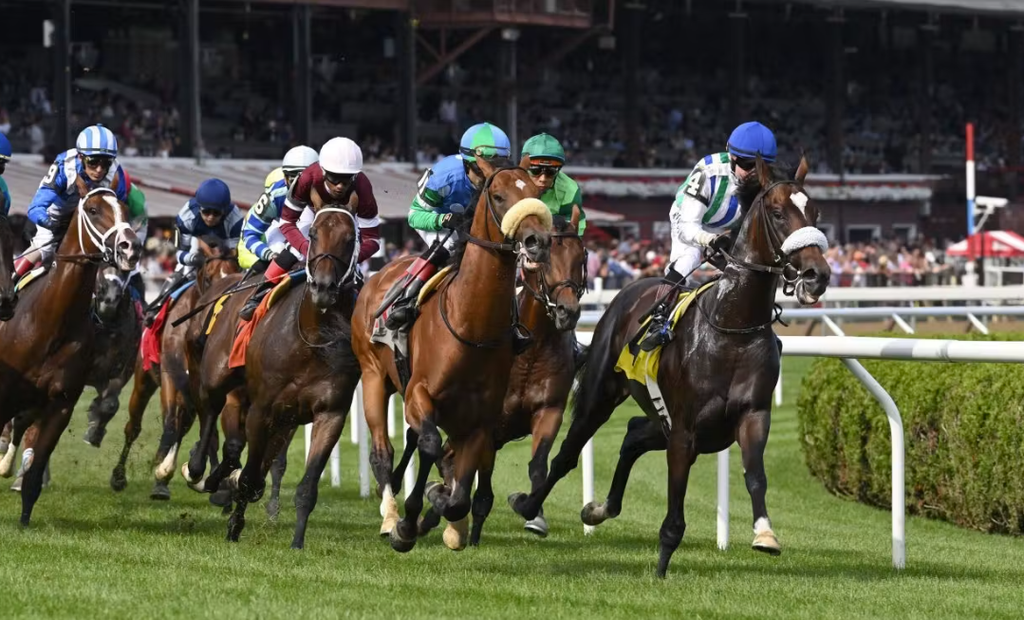
Turf FR is a popular horse racing-related keyword used by readers who want information about race predictions, horse form, jockey performance, track conditions, and upcoming turf events. The broader term turf is also widely used in horse racing discussions, while Israel Turf may appear in searches from users looking for racing analysis and selections connected with that name.
For racing followers, Turf FR can be useful when it presents clear and organized information about different runners. Instead of focusing only on favorites, readers can examine recent performance, race distance, competition level, trainer form, and other important details before developing their own view of a race.
Turf FR generally refers to horse racing information focused on turf events, daily race analysis, horse selections, and predictions.
Readers searching for Turf FR may want to study upcoming races, compare runners, or understand which horses appear competitive based on available information.
The term can also be connected with French-speaking racing audiences, where horse racing and daily turf analysis have a strong following.
Turf FR content can be particularly useful when it explains the reasoning behind a selection rather than simply providing a list of horses.
The word turf has an important meaning in horse racing.
Traditionally, turf refers to grass racing surfaces. However, the word is also commonly used more broadly when discussing horse racing, racing predictions, daily selections, and race analysis.
Online readers may search for turf when looking for information about upcoming races, horse form, racing results, or performance statistics.
Because of this wider use, turf has become closely associated with the overall world of horse racing analysis.
Israel Turf is another keyword associated with horse racing-related searches.
People looking for Israel Turf may want race information, horse selections, turf predictions, or analysis of upcoming events.
The usefulness of Israel Turf content depends on the quality of the information provided.
Clear explanations of horse form, race conditions, distance, and competition can be more valuable than unsupported predictions.
Like Turf FR, Israel Turf should be approached as a source of racing information rather than certainty about future results.
Horse racing changes every day.
Different horses participate in different events, and racing conditions can vary from one meeting to another.
This creates continuous interest in Turf FR and similar turf information.
Many racing followers want fresh information before each event.
Turf FR content can help readers review the latest horses, race distance, jockey information, and other relevant details.
Predictions remain one of the most searched areas in horse racing.
Readers often want to know which horses may deserve closer attention.
Turf FR predictions can provide ideas for further research, but they should never be viewed as guaranteed outcomes.
Good turf analysis considers several racing factors together.
Looking at only one statistic can sometimes create an incomplete picture.
Recent form shows how a horse has performed in its latest races.
A runner with several strong performances may appear more reliable.
However, Turf FR readers should also consider the quality of previous competition.
A horse that finished third in a strong race may have shown better form than one that won against weaker opponents.
Distance can affect performance significantly.
Some horses are better suited to short races, while others perform more effectively over longer distances.
Turf analysis can become more useful when readers compare the upcoming distance with previous horse performances.
Weather and track surface can influence racing.
Some horses may perform well on firm ground, while others are more comfortable under softer conditions.
Turf FR readers should consider current track information whenever it is available.
The jockey plays an important role during a horse race.
Experience, positioning, timing, and familiarity with the horse may all influence performance.
Turf FR analysis can include the jockey’s recent results and previous experience with a particular runner.
A strong jockey can support a horse’s chances, but jockey performance should never be examined alone.
The condition and ability of the horse remain equally important.
Trainer form can provide useful background information.
If several horses from one stable are performing well, it may indicate good preparation.
Turf readers can consider trainer statistics when comparing runners.
However, trainer form is only one part of complete race analysis.
Horse condition, distance, competition, track surface, and jockey experience should also be evaluated.
Competition quality can completely change how previous results should be interpreted.
A horse may have several recent victories but may now be entering a much stronger race.
Another horse may have fewer wins because it regularly competes against high-quality runners.
Turf FR analysis becomes more informative when readers study who a horse has faced previously.
This broader view helps prevent simple finishing positions from being misunderstood.
Horse racing often includes favorites and outsiders.
A favorite is usually a horse receiving strong attention before the race.
An outsider may receive less attention but can still have positive factors in its favor.
Turf FR readers should not automatically assume that the favorite will win.
An outsider may have better distance suitability, improving form, or favorable track conditions.
This uncertainty is part of what makes horse racing analysis interesting.
Daily horse selections are a common part of turf content.
These selections may highlight runners based on recent performance and expected race conditions.
Turf FR selections can make a large field easier to study by narrowing the focus to a smaller group of horses.
Readers should still review those horses independently.
A selection is more useful when users understand why a runner has been included.
Israel Turf can also be used as part of wider horse racing research.
Readers can begin by reviewing selected runners and then checking recent performances.
They can look at distance history, jockey form, trainer results, and track suitability.
Comparing Israel Turf information with Turf FR analysis can provide a wider range of opinions.
Different sources may interpret the same race differently, which can help readers notice factors they may have overlooked.
Turf content can provide several benefits to horse racing followers.
One benefit is organization.
Horse racing includes a large amount of data, and Turf FR information can help readers focus on the most important details.
Another benefit is education.
New followers can learn how horse form, distance, jockeys, trainers, and competition influence racing analysis.
Regular readers can use Turf FR and Israel Turf as additional sources when comparing their own ideas.
Horse racing terminology can be confusing for beginners.
New followers may encounter terms such as favorite, outsider, form, handicap, racecard, and turf.
Turf FR content can make these concepts easier to understand.
Beginners can start with simple factors such as recent form and race distance.
Once they understand these areas, they can move toward track conditions, jockey statistics, trainer form, and competition strength.
This step-by-step approach can make horse racing much easier to follow.
Experienced racing followers may study Turf FR in greater detail.
They may compare several horses and examine previous race quality, pace, distance records, track history, and jockey performance.
Experienced users may also look beyond simple wins and losses.
They can study whether a horse is improving, whether race conditions are favorable, and whether the competition is stronger or weaker than before.
This detailed approach can provide a more complete racing picture.
Basic predictions may simply provide a list of horse numbers or names.
Turf FR analysis can offer more value when it explains the reasons behind those selections.
For example, a horse may be highlighted because it performs well at the distance, has strong recent form, or is working with an experienced jockey.
Understanding the reasoning allows readers to evaluate the prediction rather than blindly follow it.
This makes analytical turf content more educational.
Horse racing information can change close to race time.
A runner may be withdrawn, a jockey may be replaced, or weather conditions may affect the track.
Turf FR readers should therefore check current information before relying heavily on earlier analysis.
Updated details can significantly change how a race is viewed.
The same principle applies to Israel Turf and other horse racing information sources.
Good turf content should clearly separate facts from opinions.
Confirmed horse names, previous results, race distance, and official participants can be factual.
Predictions about the final result remain opinions.
Turf FR content should avoid presenting any selection as certain.
Horse racing contains too many variables for guaranteed predictions.
Credible analysis focuses on explaining possibilities and relevant performance factors.
Readers can use Turf FR more effectively by following a structured approach.
Start by checking the complete list of runners.
Review recent form and compare previous competition.
Check race distance and track conditions.
Study jockey and trainer performance.
Then compare Turf FR selections with Israel Turf or other available analysis.
Finally, develop your own view based on the complete information rather than relying on one prediction.
Horse racing always contains uncertainty.
No Turf FR, turf, or Israel Turf prediction can guarantee a result.
Users who participate in legal horse racing betting should understand the financial risks involved and follow the rules that apply in their location.
Setting personal limits is important.
Users should avoid chasing losses or assuming that race predictions provide a guaranteed way to make money.
Turf analysis is best treated as information, research, and entertainment.
Digital horse racing content is likely to continue developing.
Racing followers increasingly want quick updates, better performance statistics, clear predictions, and mobile-friendly information.
Turf FR can continue growing by providing structured analysis and explaining why particular horses deserve attention.
Israel Turf can also remain relevant by offering clear and useful racing information.
As technology improves, turf followers may gain access to more detailed statistics and easier ways to compare horses before races.
Turf FR is associated with horse racing information, daily selections, race predictions, horse form, and general turf analysis.
In horse racing, turf traditionally refers to grass racing surfaces, but the term is also commonly used for horse racing predictions and analysis in general.
Israel Turf is a horse racing-related keyword associated with turf information, horse selections, predictions, and race analysis.
Yes, Turf FR can help beginners understand basic racing factors such as horse form, race distance, jockey performance, and track conditions.
No. Horse racing is unpredictable, and no Turf FR or Israel Turf prediction can guarantee a particular result.
Readers should combine Turf FR information with recent form, distance, jockey and trainer statistics, track conditions, competition strength, and current official race details.
Turf FR is a useful horse racing-related keyword for readers interested in race predictions, horse form, jockey performance, trainer results, racing distance, and track conditions. The wider term turf is closely connected with the world of horse racing, while Israel Turf provides another related search variation for users interested in selections and racing analysis.
The strongest turf research goes beyond simply choosing favorites. Recent performance, competition quality, distance suitability, jockey experience, trainer form, and track conditions should all be examined together.
Turf FR, turf, and Israel Turf are best used as informational resources rather than guaranteed prediction systems. When readers combine these sources with updated race details and independent analysis, they can develop a clearer and more complete understanding of horse racing.